Hi Beatz: Music & Rhythm Game
- 4.7
- Rating
- 100.00K
- Installs
- Free
- Price

 Analysis by App-foxy
Hi Beatz is the kind of rhythm game I can open for a quick break and understand almost immediately: tap along with music, keep the timing steady, and work toward improving tracks until they reach Diamond. That simple loop is its greatest strength. I never feel buried under menus or forced to learn a complicated system before playing, which makes it approachable when I want something light and music-focused rather than a long, demanding game session.
At the same time, its simplicity sets a clear limit. This is not the best choice if I am looking for deep music production tools, a large competitive scene, or the detailed progression systems found in bigger rhythm games. I see it as a compact tap-and-timing experience from Fun Tap X, aimed at players who enjoy chasing better runs and gradually upgrading their collection. Its free entry makes trying it easy, but the optional purchases mean I would approach progression with a little awareness rather than tapping through every offer automatically.
How the rhythm loop feels in everyday play
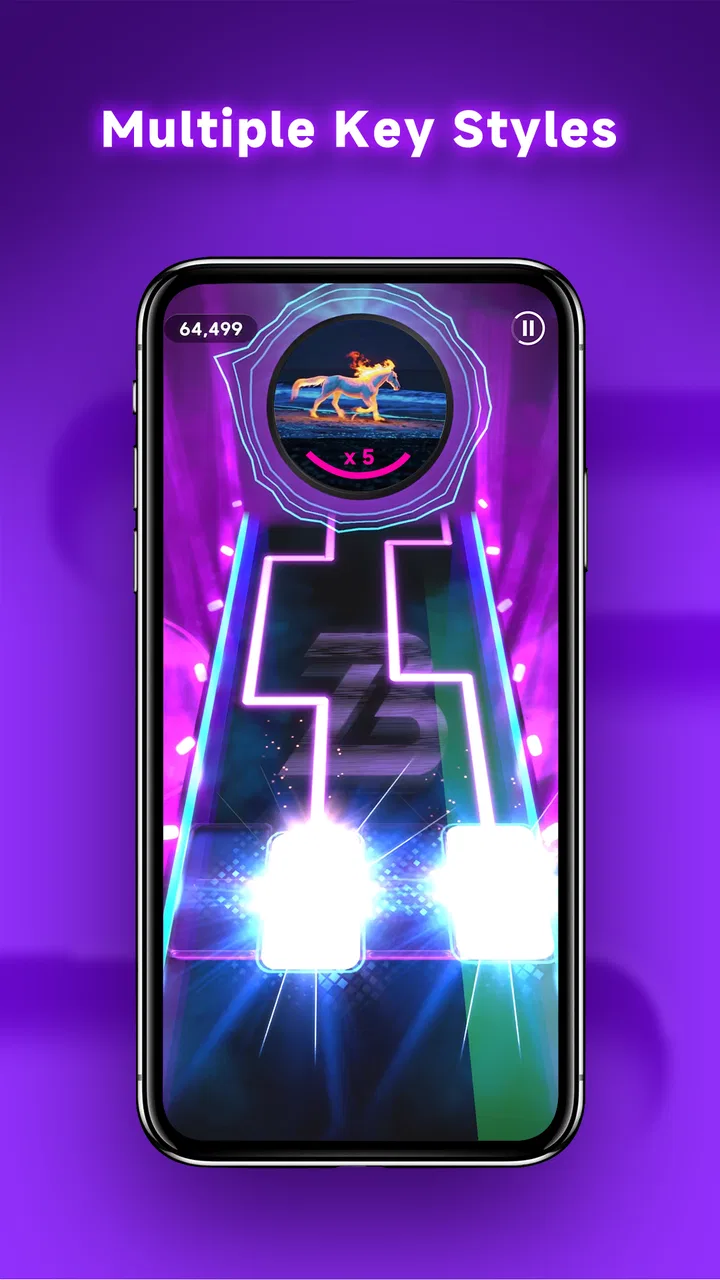
The central appeal is the direct connection between the beat and the screen. Instead of asking me to manage a broad adventure or memorize a complicated control scheme, the game puts attention on the next tap. That makes it suitable for short sessions: I can play while waiting for an appointment, take a few attempts during a commute, or use it as a small reset between more demanding tasks.
You May Also Like

 Pandora - Music & Podcasts
Pandora’s Music Is Easy to Start, but Harder to Recover
Pandora’s strength is its low-effort path from a seed to a station. Its weak spot is how much confidence it asks you to place in connection, setup, and quiet recovery.

 AccuWeather: Weather Radar
AccuWeather Review: A Quick, Clear Forecast for Everyday Decisions
For everyday plans, the best forecast is the one you can understand quickly. AccuWeather makes rain timing, radar, and local conditions easy to act on, with a few trade-offs.

 Hill Climb Racing
Why Hill Climb Racing Still Turns Crashes Into One More Run
A tiny car, a bumpy hill and one more upgrade: Hill Climb Racing keeps resurfacing because its simple chaos makes every near-miss feel personal.

 AliExpress - Shopping App
AliExpress Makes Global Shopping Feel Personal, but Shoppers Bear the Risk
AliExpress turns a global marketplace into a pocket-sized discovery engine. Its reach is useful, its shopping loop compelling, and its trade-offs easy to miss.

 Lords Mobile: Kingdom Wars
Lords Mobile Is a Kingdom-Building Routine, Not a Quick Match
A case-by-case verdict on the building, battles, device demands, and social commitments that make Lords Mobile rewarding for some players and exhausting for others.

 PDF Scanner app - TapScanner
TapScanner Makes Paperwork Easier to Capture, Check, and Share
TapScanner makes scanning with a phone feel less like a rescue operation and more like a dependable step in getting work done. Its capture tools are useful, though not flawless.
More From Our News Desk
View All News


That short-session quality is important because rhythm games can become tiring when every attempt requires a long setup. Here, the idea of playing hit songs and improving tracks toward Diamond gives each session a clear purpose. Even when I do not finish a goal, I know what I am trying to improve: timing, consistency, or the quality of a particular track. The loop is easy to explain to a friend, but it still leaves room for the satisfying feeling of turning a messy attempt into a cleaner one.
I especially like the way the Diamond target gives ordinary replays a reason to exist. In many casual games, completing a stage once can make it feel disposable. A higher grade changes that relationship. I can return to a familiar song not because I have to, but because I want to see whether better concentration produces a stronger result. The most rewarding part is not the first clear; it is the gradual tightening of my timing.
That design also makes the game friendly to players with different levels of experience. Someone new to rhythm games can focus on learning the basic beat, while a more practiced player can treat the same track as a consistency test. I would not describe it as a substitute for a full arcade-style rhythm game, but it offers a less intimidating entry point for anyone who likes music and wants interaction rather than passive listening.
Why the upgrade goal matters
The track-upgrade idea gives the music a sense of ownership and progress without requiring me to understand a complicated character-building system. Reaching Diamond becomes a personal benchmark. If I am the type of player who enjoys polishing one challenge instead of constantly moving to something new, this structure should feel more satisfying than a game that only rewards forward motion.
There is also a useful mental distinction between playing for relaxation and playing for improvement. On a relaxed session, I can simply follow the song and enjoy the rhythm. When I have more focus, I can replay a track and pay attention to where my timing slips. That flexibility helps the game fit different moods, although the experience naturally becomes more demanding when I start chasing the highest results.
One practical tip is to avoid treating every missed tap as a reason to restart immediately. I find it more useful to finish an attempt, notice whether the problem came from rushing or hesitating, and then try again with one adjustment. A tap game can encourage impatient repetition, but deliberate replays are more helpful than blindly pressing the restart option. The Diamond goal is most enjoyable when it supports learning instead of turning every imperfect run into frustration.
What makes it different from usual music apps
Compared with a normal music player, Hi Beatz gives me a reason to listen actively. I am not just selecting a song and letting it run; I am responding to it and trying to improve my performance. That makes it a better choice when I want a small challenge during a break, while a conventional music app remains better for background listening, playlists, discovery, or uninterrupted playback.
Compared with larger rhythm games, the attraction is the smaller commitment. Big alternatives often offer more layers, more modes, or a wider sense of progression, but they can also feel busy. Hi Beatz is easier to pick up when I do not want to spend time configuring a session. The trade-off is that players who value extensive customization or a deep long-term system may find the experience narrower.
It also differs from music-learning software. I would not use it as a replacement for an instrument lesson, a metronome, or structured ear training. Tapping accurately can improve my sense of timing in the moment, but the game is built around play and progression, not formal musical instruction. That distinction matters if someone downloads it expecting educational feedback rather than an entertaining rhythm challenge.
Where the free model needs attention
The game is free to download, which lowers the risk of trying it. However, it includes optional in-app purchases ranging from $0.49 to $99.99 per item. That is a very broad range, and it changes how I would recommend using the game. I would begin with the free experience, decide whether the tap-and-upgrade loop genuinely holds my attention, and only then consider spending anything.
For younger players, the Teen content rating is worth taking seriously, especially when the device is shared or purchases can be made without an adult checking them. I would set purchase controls before handing the phone to a child. The game may be approachable in its controls, but approachable does not mean every player should have unrestricted access to optional spending.
The purchase structure can also affect how I judge progress. If I am chasing Diamond results, I want the achievement to feel connected to my timing rather than to a purchase. My advice is to treat upgrades as optional support, not as an automatic part of the game. If a player feels pressured to buy in order to enjoy the music or keep progressing, that is a sign to step back and decide whether the free portion is enough.
This is one of the main weaknesses for me. The core loop is clean and easy to understand, but any free-to-play rhythm game has to balance immediate enjoyment with reasons to spend. Players who dislike purchase prompts or who want a completely fixed-price experience may prefer a paid rhythm title instead, even if it offers less convenience at the start.
Performance, accessibility, and practical expectations
Hi Beatz supports devices running Android 8.0 or later, so it is not restricted to only the newest phones. That makes it a practical option for people using an older compatible Android device, although rhythm games are naturally sensitive to touch response and audio timing. A phone that handles ordinary apps comfortably may still feel less satisfying if its touch input or sound output introduces noticeable delay.
Before judging my own ability, I would test the game in the exact setup I plan to use. Playing with the phone held differently, switching between speakers and headphones, or using a busy environment can change how clearly I perceive the beat. I would also keep notification interruptions to a minimum during serious attempts. This is a small but important workflow: if the timing feels inconsistent, I first check the device and listening conditions instead of assuming the game is impossible.
Players who prefer tapping with one hand should find the basic idea naturally suited to casual mobile use, but I would still choose a comfortable grip for longer sessions. Repeated attempts can become tiring when I hold the phone awkwardly or tap with unnecessary force. A relaxed hand helps me react more consistently, and it prevents the game from turning a short break into an uncomfortable one.
Another useful habit is separating discovery from score chasing. On the first run through a track, I focus on recognizing its rhythm and enjoying the song. On later attempts, I concentrate on accuracy. Mixing those goals can make a new track feel harder than it really is because I am trying to listen, react, and evaluate the result simultaneously. This two-step approach makes the upgrade path feel more manageable without requiring any special technique.
Who will enjoy it most
I would recommend this game to someone who likes music-based mobile games but wants a straightforward starting point. It suits players who enjoy short sessions, repeated attempts, and visible goals such as moving a track toward Diamond. It is also a good fit for people who prefer learning through repetition rather than reading long explanations. The basic premise is clear enough that I can hand it to a friend and explain the appeal in a few words.
It works particularly well in everyday situations where I have only a little time. Imagine waiting for a coffee order: I can play one attempt, put the phone away, and return later without needing to remember a complex story or map location. On a quiet evening, I can instead spend longer revisiting tracks and trying to improve consistency. That range is more valuable than it first appears because the game does not demand that every session have the same length or intensity.
I would be more cautious recommending it to expert rhythm-game players who expect demanding chart design, extensive modes, or a highly competitive environment. The Diamond objective may provide replay value, but it does not automatically create the depth of a specialized rhythm platform. Players who want to build playlists, practice instruments, or explore advanced musical concepts should choose tools designed for those purposes.
I would also skip it if I strongly dislike free-to-play monetization. The purchase range is enough to make spending controls part of the setup, not an afterthought. Someone looking for a one-time purchase with no optional items may have a better experience elsewhere, even if that means paying before playing.
What to know before installing
The game is listed as a Music title, and that description is accurate in the sense that the songs and beat response are the center of play. I would not install it expecting a story-driven adventure or a broad collection of unrelated mini-games. Its identity depends on whether tapping in time feels enjoyable to me. If the basic rhythm interaction is satisfying, the upgrade goal gives me a reason to continue; if it is not, extra progression will not solve that problem.
Fun Tap X presents a focused concept rather than an overloaded package. The current release is version 0.2.0, which reinforces my expectation that the experience should be approached as a focused game rather than a fully mature platform with every possible feature. I would keep expectations centered on the core tap-and-beat loop and judge it by how well that loop holds up over repeated sessions.
The store listing shows an average rating of 4.6 from around 3.2 thousand ratings, with more than four hundred written reviews, and the game has passed 100 thousand installs. Those figures suggest that the concept has found an audience, but they should not replace my own test of the timing and progression. Rhythm games are personal: one player may find a track motivating while another may find the same repetition too limited.
My final take
Hi Beatz succeeds because it understands the value of a clear loop. Tap with the music, replay what needs work, and aim to raise tracks to Diamond. I appreciate that I can enjoy it casually or turn a short session into a focused timing exercise. It is easy to recommend as a free trial for anyone curious about mobile rhythm games, especially if they want something less complicated than the usual large-scale alternatives.
My reservation is equally clear: the experience may not satisfy players who need deep variety, formal music tools, or a purchase-free structure. The optional items, including prices as high as $99.99 per item, mean I would use purchase safeguards and decide on a spending limit before playing regularly. I would also check that my device and audio setup feel responsive enough for accurate taps.
Overall, I see it as a pleasant, focused music game rather than a definitive rhythm-game replacement. Install it if you want quick beat-driven sessions and enjoy improving a personal best; skip it if you need extensive systems or a completely fixed-price experience. For the right player, that narrow focus is exactly what makes it appealing: there is little to learn before the first tap, and enough room to keep practicing after the first successful run.
FAQs for Hi Beatz: Music & Rhythm Game
01What is Hi Beatz: Music & Rhythm Game?
Hi Beatz: Music & Rhythm Game is an engaging mobile app available for both Android and iOS platforms. It combines the excitement of rhythm-based gameplay with a vast library of music tracks. Players tap along to beats, unlocking new levels and tracks as they progress, making it a must-try for music enthusiasts.
02Is Hi Beatz free to play?
Yes, Hi Beatz is free to download and play. However, it does offer in-app purchases. Players can buy additional tracks, remove ads, or purchase special items to enhance their gaming experience. While the free version is enjoyable, these purchases can provide added convenience and variety.
03What features does Hi Beatz offer?
Hi Beatz features a wide array of music tracks spanning various genres, intuitive touch controls, and vibrant graphics. It also includes a competitive leaderboard, allowing players to challenge friends and climb the ranks. Regular updates introduce new tracks, ensuring a fresh experience each time you play.
04Are there any age restrictions for playing Hi Beatz?
Hi Beatz is suitable for players of all ages, but it’s recommended for those aged 12 and above due to the complexity of some tracks and competitive elements. Parents are advised to supervise in-app purchases to prevent unintended spending by younger players.
05Can Hi Beatz be played offline?
Hi Beatz requires an internet connection for downloading new tracks and leaderboards. However, once tracks are downloaded, you can play them offline. This feature is great for users who want to enjoy the game without worrying about data usage or connectivity issues.
Pros
- Engaging rhythm-based gameplay.
- Diverse music library to explore.
- Intuitive and responsive controls.
- Regular updates with new tracks.
- Visually appealing interface design.
Cons
- Requires constant internet connection.
- In-app purchases can be costly.
- Ads may interrupt gameplay.
- Limited offline features.
- High battery consumption.

Hi Beatz: Music & Rhythm Game
Gallery